REMOVAL
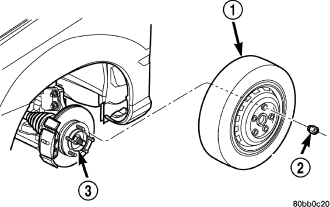
CAUTION: Boot sealing is vital to retain special lubricants and to prevent foreign contaminants from entering the CV joint. Mishandling, such as allowing the assemblies to dangle unsupported, or pulling or pushing the ends can cut boots or damage CV joints. During removal and installation procedures, always support both ends of the halfshaft to prevent damage.
CAUTION: The halfshaft, when installed, acts as a bolt and secures the front hub/bearing assembly. If vehicle is to be supported or moved on its wheels with a halfshaft removed, install a PROPER–SIZED BOLT AND NUT through front hub. Tighten bolt and nut to 244 N·m (180 ft. lbs.). This will ensure that the hub bearing cannot loosen.
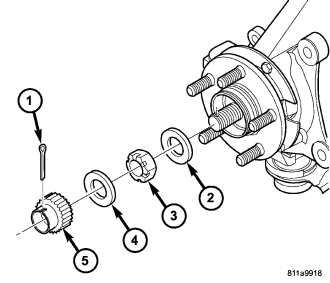
| Halfshaft Retaining Hardware |
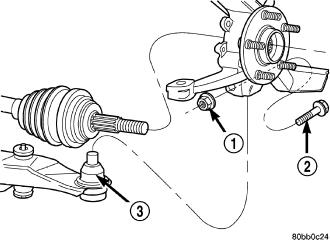
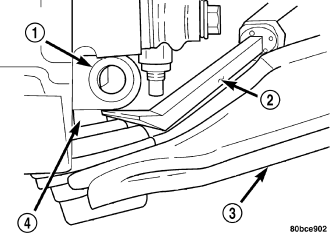
NOTE: Use caution when separating ball joint stud from steering knuckle, so ball joint seal does not get damaged.
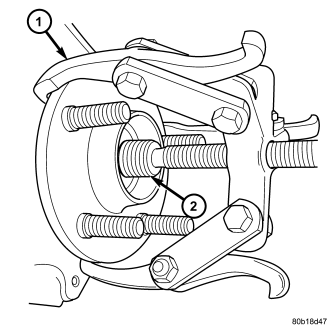
NOTE: Care must be taken not to separate the inner CV joint during this operation. Do not allow halfshaft to hang by inner CV joint, halfshaft must be supported.
do not strike shaft with hammer,
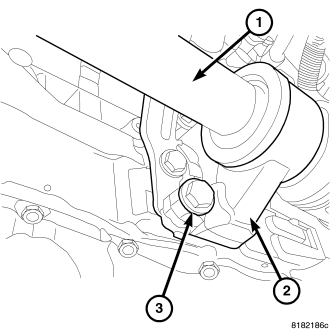
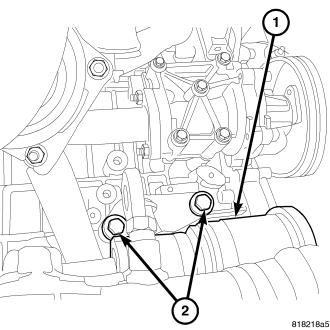
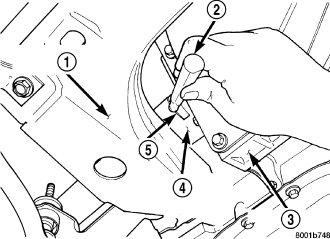
NOTE: Removal of the inner tripod joints is made easier if you apply outward pressure on the joint as you strike the punch with a hammer. Do not pull on interconnecting shaft to remove, as the inner joint will become separated.
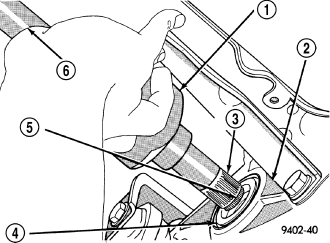
When removing tripod joint, do not let spline or snap ring drag across sealing lip of the transaxle to tripod joint oil seal. When tripod joint is removed from transaxle, some fluid will leak out.
CAUTION: The halfshaft, when installed, acts as a bolt and secures the front hub/bearing assembly. If vehicle is to be supported or moved on its wheels with a halfshaft removed, install a PROPER–SIZED BOLT AND NUT through front hub. Tighten bolt and nut to 244 N·m (180 ft. lbs.). This will ensure that the hub bearing cannot loosen.