CURB HEIGHT MEASUREMENT
The wheel alignment is to be checked and all alignment adjustments made with the vehicle at its required curb height specification.
Vehicle height is to be checked with the vehicle on a flat, level surface, preferably a vehicle alignment rack. The tires are to be inflated to the recommended pressure. All tires are to be the same size as standard equipment. Vehicle height is checked with the fuel tank full of fuel, and no passenger or luggage compartment load.
Vehicle height is not adjustable. If the measurement is not within specifications, inspect the vehicle for bent or weak suspension components. Compare the parts tag on the suspect coil spring(s) to the parts book and the vehicle sales code, checking for a match. Once removed from the vehicle, compare the coil spring height to a correct new or known good coil spring. The heights should vary if the suspect spring is weak.
NOTE: Prior to reading the curb height measurement, the front and rear of the vehicle must be jounced to settle the suspension. Induce jounce by pushing down on the center of the bumper (fascia), using care not to damage the vehicle, moving the vehicle up and down, gradually increasing the suspension travel with each stroke. Release the bumper at the bottom of each stroke, repeating this action several times. Perform this to both front and rear suspensions an equal amount of times.
Measure curb height as follows:
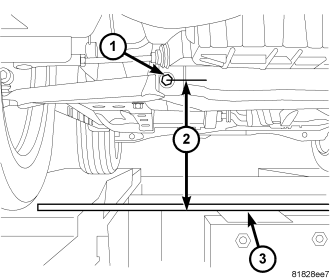
NOTE: On some vehicles it may be necessary to remove an engine belly pan in order to gain access to the lower control arm pivot bolt.
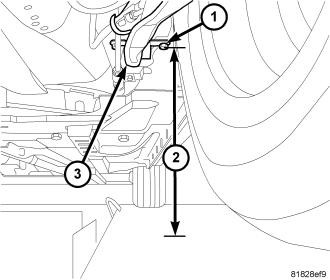
Maximum left-to-right differential is not to exceed 12.5 mm (0.5 in.).
(Refer to 2 - SUSPENSION/FRONT/STRUT - REMOVAL)
| WHEEL SIZE | FRONT | REAR |
| ALL | 214 mm ± 8 mm | 338 mm ± 8 mm |
| 8.43 in. ± 0.32 in. | 13.31 in. ± 0.32 in. |