P2120-ACC PEDAL POSITION SENSOR 1 CKT PLAUSIBILITY
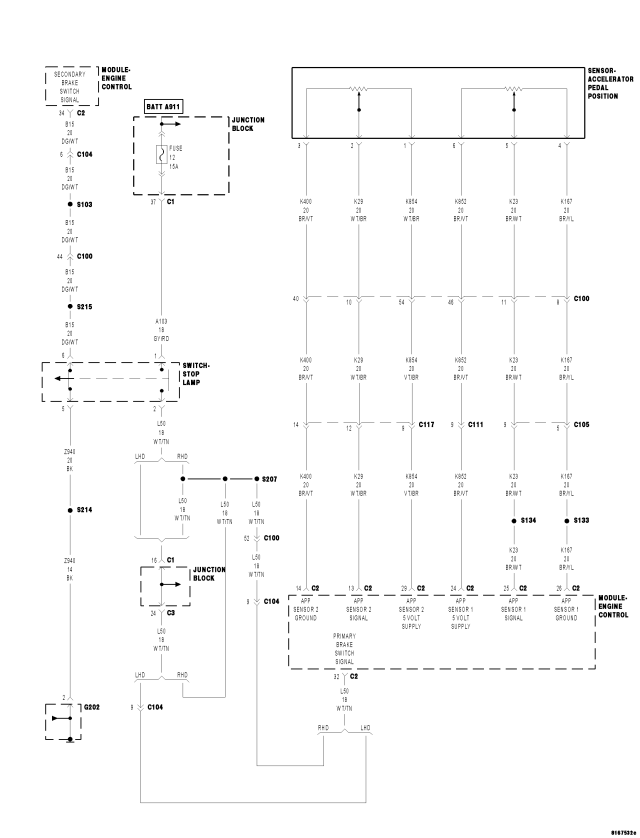
For a complete wiring diagram Refer to Section 8W
- When Monitored:
With the ignition on.
- Set Condition:
APP Sensor #1 and APP Sensor #2 signals do not agree.
| Possible Causes |
| ACCELERATOR PEDAL POSITION SENSOR |
| ECM - APP SENSOR 1 5-VOLT SUPPLY CIRCUIT |
| SENSOR GROUND OPEN (APP SENSOR) |
| INTERMITTENT CONDITION |
| APP SENSOR 5-VOLT SUPPLY CIRCUIT OPEN |
| APP SENSOR SIGNAL CIRCUIT OPEN |
| APP SENSOR 5-VOLT SUPPLY CIRCUIT SHORTED TO SENSOR GROUND |
| APP SENSOR SIGNAL CIRCUIT SHORTED TO GROUND |
| APP SENSOR 5-VOLT SUPPLY CIRCUIT SHORTED TO GROUND |
| VERIFY APP SENSOR OPERATION |
| APP SENSOR SIGNAL CIRCUIT SHORTED TO THE SENSOR GROUND CIRCUIT |
| APP SENSOR 5-VOLT SUPPLY CIRCUIT SHORTED TO VOLTAGE |
| ECM - SENSOR GROUND OPEN |
| APP SENSOR CIRCUIT SHORTED TO VOLTAGE |
| APP SENSOR GROUND CIRCUIT SHORTED TO VOLTAGE |
| ECM - APP SENSOR SIGNAL CIRCUIT |
Diagnostic Test
1.APP SENSOR IDLE VOLTAGE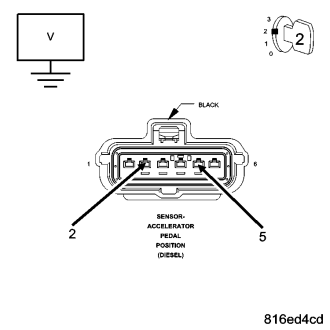
NOTE: If DTC P0641, P0651 or P0697 is present with this DTC, diagnose DTCs P0641, P0651 or P0697 before diagnosing this DTC.
NOTE: If the ECM detects and stores a DTC, the ECM also stores the engine/vehicle operating conditions under which the DTC was set. Some of these conditions are displayed on the scan tool at the same time the DTC is displayed.
NOTE: Before erasing stored DTCs, record these conditions. Attempting to duplicate these conditions may assist when checking for an active DTC.
NOTE: The APP Sensor is a device that contains 2 separate potentiometer type sensors. Each sensor has its own 5-volt supply circuit, sensor ground circuit and signal circuit. The APP Sensor no longer incorporates a low-idle switch.
NOTE: The APP Sensor 2 signal should always be approximately 1/2 the voltage of the APP Sensor 1 signal.
Is the voltage between 0.42 and 0.51 volt for sensor 1 and 0.19 and 0.28 volt for sensor 2?
Yes
- Go To2
No
- Go To4
2.APP SENSOR WIDE OPEN THROTTLE VOLTAGE
Is the voltage between 4.45 and 4.75 volts for #1 and 2.15 and 2.45 volts for #2?
Yes
- Go To3
No
- Go To4
3.VERIFY APP SENSOR OPERATION
NOTE: The percentage readings for APP Sensors 1 and 2 should increase smoothly as the pedal is depressed.
NOTE: This test can also performed using a voltmeter by back probing each APP Sensor Signal circuit at the APP Sensor harness connector and observing the voltmeter for a smooth voltage change through the entire pedal travel.
Does the percentage (voltage) increase smoothly for both readings with the accelerator pedal travel?
Yes
- Refer to the *CHECKING FOR AN INTERMITTENT DTC Diagnostic Procedure. (Refer to 9 - ENGINE - DIAGNOSIS AND TESTING)
No
- Replace the Accelerator Pedal Position Sensor in accordance with the Service Information.
- Perform the ECM Verification Test Ver. 1 (Refer to 9 - ENGINE - DIAGNOSIS AND TESTING).
4.VERIFY 5-VOLT SUPPLY AND SENSOR REFERENCE VOLTAGE A CIRCUITS
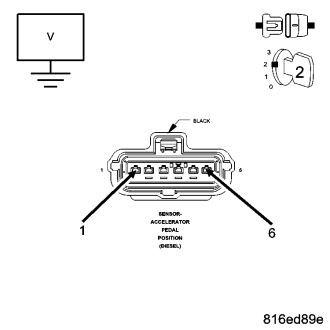
NOTE: Perform the rest of this diagnostic procedure on the individual APP Sensor Potentiometer (1 or 2) that did not display the correct voltages in the previous test.
Is the voltage between 4.7 and 5.3 volts?
Yes
- Go To5
No
- Go To13
5.VERIFY APP SIGNAL CIRCUIT
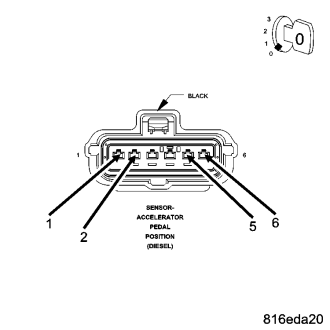
Does the scan tool display between 4.0 and 5.5 volts?
Yes
- Go To6
No
- Go To9
6.APP SENSOR GROUND CIRCUIT SHORTED TO VOLTAGE
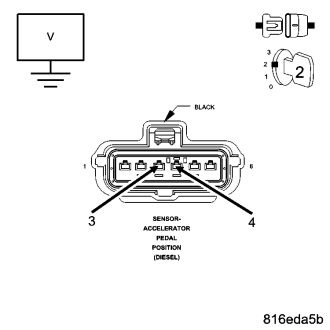
Is the voltage above 1.0 volt?
Yes
- Repair the App Sensor Ground circuit for a short to voltage.
- Perform the ECM Verification Test Ver. 1 (Refer to 9 - ENGINE - DIAGNOSIS AND TESTING).
No
- Go To7
7.SENSOR GROUND OPEN
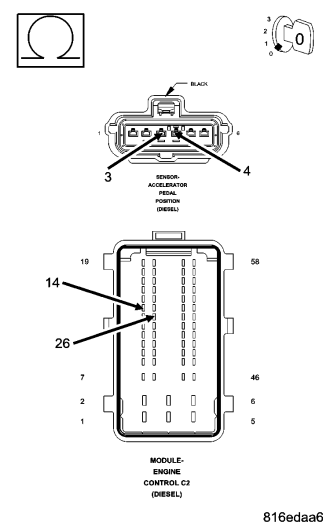
Is the resistance below 10.0 ohms?
Yes
- Go To8
No
- Repair the APP Sensor Ground circuit for an open.
- Perform the ECM Verification Test Ver. 1 (Refer to 9 - ENGINE - DIAGNOSIS AND TESTING).
8.ECM - SENSOR GROUND OPEN
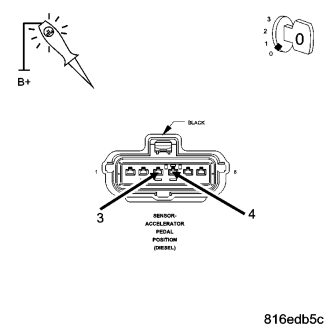
Does the test light illuminate brightly?
Yes
- Replace the Accelerator Pedal Position Sensor.
- Perform the ECM Verification Test Ver. 1 (Refer to 9 - ENGINE - DIAGNOSIS AND TESTING).
No
- Replace and program the Engine Control Module in accordance with the Service Information.
- Perform the ECM Verification Test Ver. 1 (Refer to 9 - ENGINE - DIAGNOSIS AND TESTING).
9.APP SENSOR SIGNAL CIRCUIT OPEN
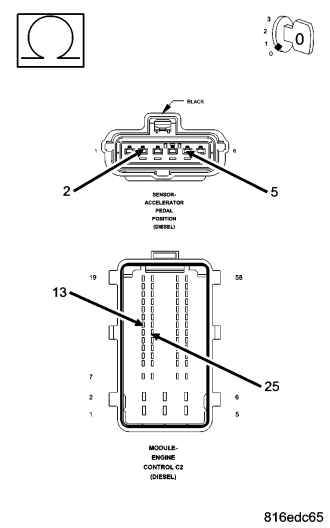
Is the resistance below 10.0 ohms?
Yes
- Go To10
No
- Repair the APP Sensor Signal circuit for an open
- Perform the ECM Verification Test Ver. 1 (Refer to 9 - ENGINE - DIAGNOSIS AND TESTING).
10.APP SENSOR SIGNAL CIRCUIT SHORTED TO GROUND
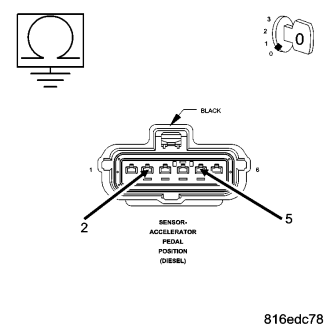
Is the resistance below 1000 ohms?
Yes
- Repair the APP Sensor Signal circuit for a short to ground.
- Perform the ECM Verification Test Ver. 1 (Refer to 9 - ENGINE - DIAGNOSIS AND TESTING).
No
- Go To11
11.APP SENSOR SIGNAL CIRCUIT SHORTED TO THE SENSOR GROUND CIRCUIT
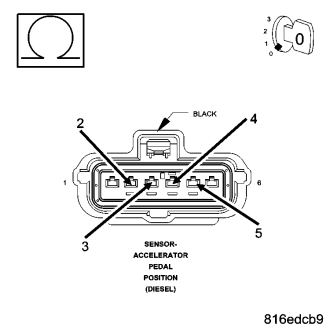
Is the resistance below 1000 ohms?
Yes
- Repair the APP Sensor Signal and Sensor Ground circuits for a short together.
- Perform the ECM Verification Test Ver. 1 (Refer to 9 - ENGINE - DIAGNOSIS AND TESTING).
No
- Go To12
12.APP SENSOR SIGNAL CIRCUIT SHORTED TO VOLTAGE
Is the voltage above 1.0 volt?
Yes
- Repair the APP Sensor Signal circuit for a short to voltage.
- Perform the ECM Verification Test Ver. 1 (Refer to 9 - ENGINE - DIAGNOSIS AND TESTING).
No
- Replace and program the Engine Control Module in accordance with the Service Information.
- Perform the ECM Verification Test Ver. 1 (Refer to 9 - ENGINE - DIAGNOSIS AND TESTING).
13.APP SENSOR 5-VOLT SUPPLY CIRCUITS OPEN
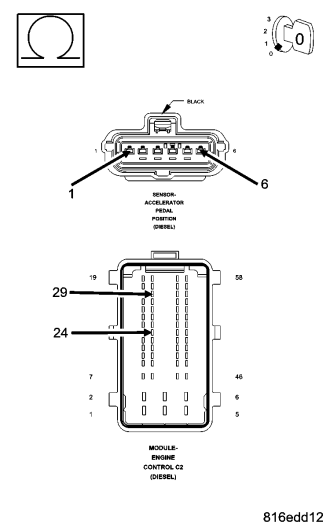
Is the resistance below 10.0 ohms?
Yes
- Go To14
No
- Repair the Accelerator Pedal Position Sensor 5-Volt Supply circuit for an open.
- Perform the ECM Verification Test Ver. 1 (Refer to 9 - ENGINE - DIAGNOSIS AND TESTING).
14.APP SENSOR 5-VOLT SUPPLY CIRCUIT SHORTED TO SENSOR GROUND
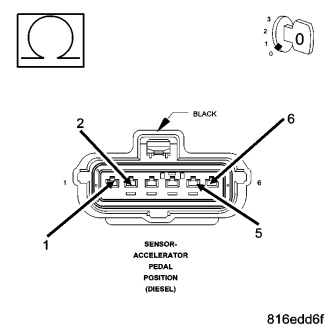
Is the resistance above 1000 ohms?
Yes
- Go To15
No
- Repair the 5-Volt Supply circuit for a short to the Sensor Ground circuit.
- Perform the ECM Verification Test Ver. 1 (Refer to 9 - ENGINE - DIAGNOSIS AND TESTING).
15.APP SENSOR 5-VOLT SUPPLY CIRCUIT SHORTED TO GROUND
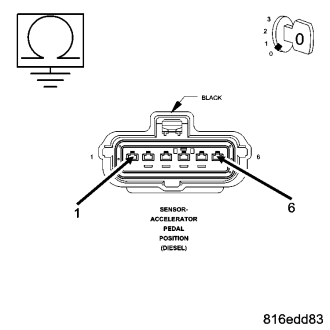
Is the resistance below 1000 ohms?
Yes
- Repair the Accelerator Pedal Position Sensor 5-Volt Supply circuit for a short to ground.
- Perform the ECM Verification Test Ver. 1 (Refer to 9 - ENGINE - DIAGNOSIS AND TESTING).
No
- Go To16
16.APP SENSOR 5-VOLT SUPPLY SHORTED TO VOLTAGE
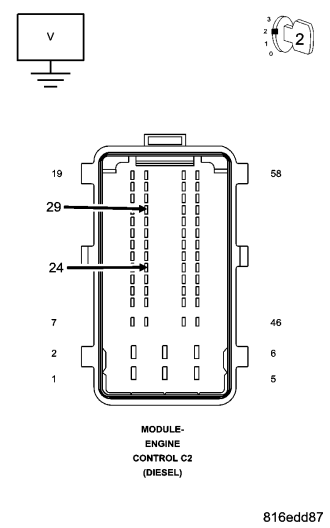
Is the voltage above 1.0 volt?
Yes
- Repair the Accelerator Pedal Position Sensor 5-Volt Supply circuit for a short to voltage.
- Perform the ECM Verification Test Ver. 1 (Refer to 9 - ENGINE - DIAGNOSIS AND TESTING).
No
- Replace and program the Engine Control Module in accordance with the Service Information.
- Repair as necessary.
- Perform the ECM Verification Test Ver. 1 (Refer to 9 - ENGINE - DIAGNOSIS AND TESTING).